The question sounded simple enough, but Caitlin Clark’s reaction immediately changed the atmosphere.
During a basketball media discussion, a reporter asked the Indiana Fever star to choose between two of the WNBA’s most recognizable competitors.
“Who do you think deserves to be the best player in the WNBA this year — Angel Reese or A’ja Wilson?”
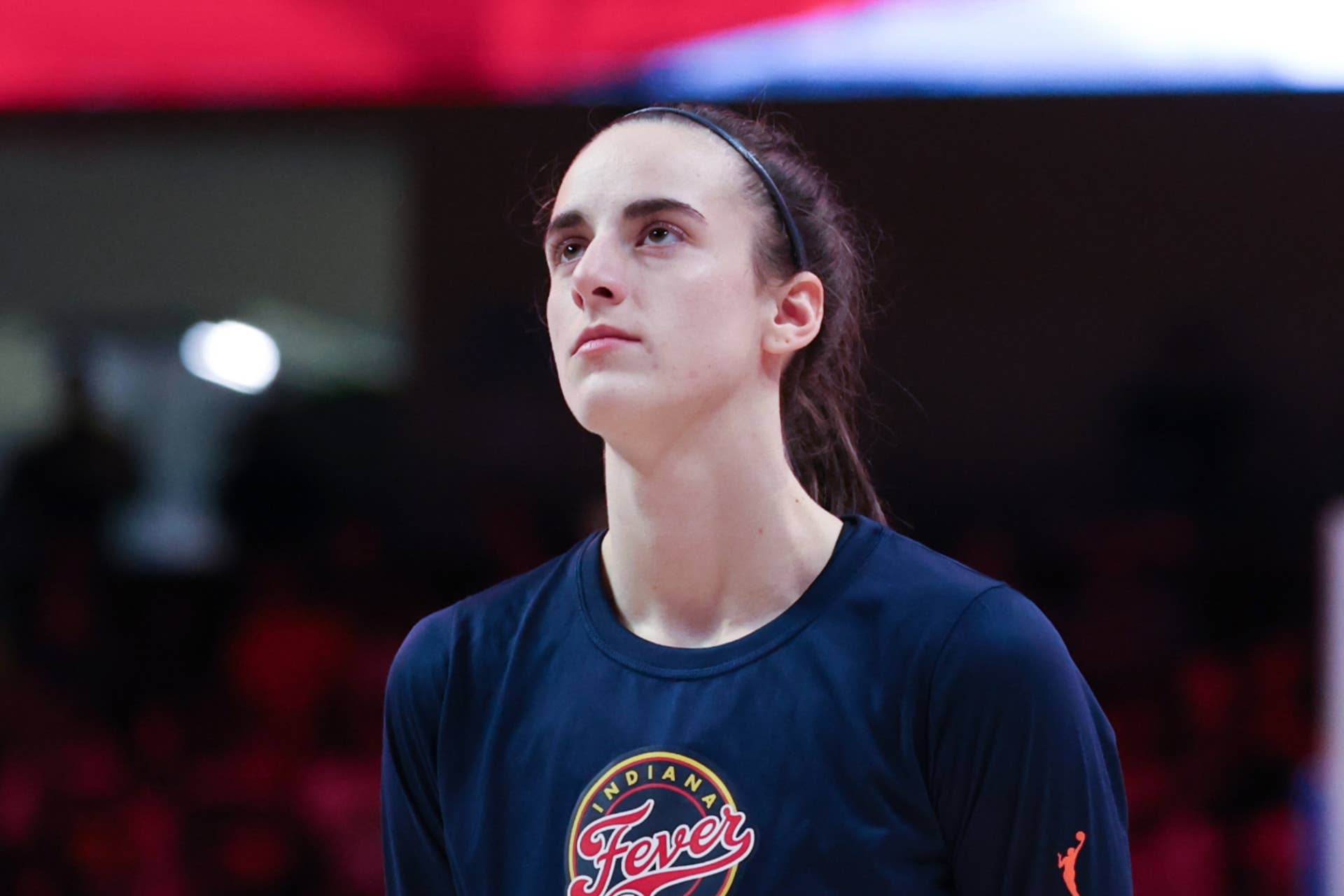 Clark paused.
Then came a small, unmistakable smirk.
Several reporters leaned forward, anticipating an answer that could reignite one of women’s basketball’s most passionate debates.
Clark looked directly at the reporter.
“If we’re talking about the best player, we need to decide whether we’re rewarding attention or actual basketball performance.”
The room grew noticeably quieter.
She continued.
“Because those aren’t always the same thing.”
The response immediately introduced a much more difficult question.
Was Clark about to support Angel Reese, whose rebounding and competitiveness had attracted enormous attention?
Or would she choose A’ja Wilson, whose established excellence made her an imposing standard for the league?
What followed was not simply a comparison of two basketball stars.
It became a pointed discussion about statistics, winning, consistency, and the difference between popularity and greatness.
And Clark’s final answer would force everyone in the room to reconsider what the question really meant.
1. The Question That Changed the Entire Interview
The media session had started with ordinary basketball conversation.
Clark discussed preparation, team chemistry, and the challenges of competing against elite professional athletes.
Reporters asked about defensive adjustments and the importance of maintaining confidence through difficult stretches.
Then one journalist shifted the conversation toward the league’s biggest individual stars.
The reporter introduced Angel Reese and A’ja Wilson as contrasting candidates for the unofficial title of best player.
Reese represented an emerging generation of highly visible competitors.
Her aggressive rebounding, physical presence, and determination had made her a major talking point among basketball fans.
Wilson represented a different standard.
Her scoring versatility, defensive influence, and established leadership had already shaped discussions about excellence in women’s basketball.
The reporter wanted Clark to make a direct choice.
“Angel Reese or A’ja Wilson?”
Clark smiled before answering.
At first, the expression appeared playful.
Then she asked whether the question referred to popularity, individual production, or overall impact.
The journalist insisted that she should choose the player who deserved the strongest recognition.
Clark tilted her head.
“That’s a different question,” she replied.
A few people laughed.
But the journalist pressed further.
He argued that great players should be judged by the influence they have on the league.
Clark acknowledged that influence mattered.
However, she questioned whether media attention should carry the same weight as production on the basketball court.
That distinction became the central issue.
The reporter had expected a name.
Clark wanted to challenge the standard behind the choice.
2. Why Angel Reese Deserved Serious Consideration
Clark began by discussing Reese’s strengths.
She described rebounding as one of basketball’s most demanding responsibilities.
A player must anticipate missed shots, establish position, and repeatedly compete through physical contact.
Those contributions can create valuable possessions without producing highlight-reel moments.
Reese’s willingness to battle inside made her difficult to ignore.
Clark also recognized the importance of energy.
Players who pursue rebounds aggressively can influence how opponents approach every possession.
That persistence can change the rhythm of a game.
But Clark argued that evaluating an elite player required a broader view.
Rebounding numbers alone could not determine overall superiority.
A complete assessment also needed to consider shooting efficiency, defensive assignments, offensive decisions, and how a player affected team success.
The reporter interrupted.
“Are you saying Angel isn’t complete enough?”
Clark’s expression became serious.
“No, I’m saying every player has strengths and areas to improve.”
She explained that acknowledging a player’s development was not an insult.
Even outstanding athletes faced weaknesses.
Greatness required continuous improvement.
The reporter suggested that Reese’s supporters might interpret the response as dismissive.
Clark pushed back.
“Respecting somebody doesn’t mean pretending there’s nothing left for them to learn.”
That answer shifted the conversation.
Rather than attacking Reese, Clark had identified the difference between celebrating individual strengths and declaring someone the league’s best overall player.
The distinction mattered because Reese’s visibility could sometimes overshadow the complexity of evaluating her performance.
Clark emphasized that recognition should follow measurable contributions and sustained development.
But another question remained.
Would those standards favor A’ja Wilson?
3. A’ja Wilson Enters the Debate — And the Standard Changes
When the discussion turned toward Wilson, Clark adopted a noticeably different tone.
She described the challenge of facing a player capable of influencing games in several different ways.
Wilson’s offensive versatility created problems for opposing defenses.
Her ability to operate near the basket and score from other areas required constant attention.
Defensively, her presence could change an opponent’s shot selection.
Clark emphasized that these contributions went beyond the most obvious statistics.
A defender who forces opponents to reconsider their decisions can influence possessions without recording a block.
A scorer who attracts defensive pressure can create opportunities for teammates.
A leader who performs consistently can stabilize a team during difficult stretches.
Those factors made Wilson a particularly compelling candidate.
The reporter leaned forward.
“So you’re choosing A’ja?”
Clark paused again.
“Let me finish.”
The response drew a few surprised smiles.
She explained that an award should reward the strongest performance during the period being evaluated.
A player’s reputation should not automatically guarantee recognition.
Neither should a younger player’s popularity.
Clark argued that every candidate needed to be measured against the same criteria.
That included Wilson.
Even a highly decorated star should have to demonstrate that her current performance deserved the honor.
The reporter challenged her once more.
“If you had one vote, would you really ignore what Angel brings to the league?”
Clark shook her head.
“Nobody said anything about ignoring Angel.”
Then she made a sharper distinction.
“Bringing attention to the league is valuable, but being the best basketball player is a different responsibility.”
The room became quiet again.
Clark had not dismissed the importance of growing the sport.
She had separated commercial influence from individual basketball excellence.
And that separation would determine her final choice.
4. The Debate Becomes More Personal
Another journalist raised the issue of Clark’s competitive history with Reese.
The two players had attracted enormous attention during their college careers.
Their contrasting personalities and high-profile matchups had become recurring subjects in basketball conversations.
The journalist wondered whether that history affected Clark’s judgment.
Clark immediately rejected the suggestion.
“Competition doesn’t mean you can’t recognize somebody’s talent.”
She explained that respecting an opponent did not require agreeing with every public comparison.
Athletes could compete intensely and still appreciate one another’s strengths.
However, she also questioned why certain discussions repeatedly framed women athletes as personal enemies.
The reporter responded that rivalry generated excitement.
Clark acknowledged that rivalries could help attract audiences.
But she argued that the attention should ultimately return to the game.
“Talk about what we do on the court,” she said.
“That’s what should matter.”
The exchange introduced another layer to the debate.
Clark was being asked to assess two players while navigating a familiar public narrative about her relationship with Reese.
Choosing Wilson might be interpreted as criticism of Reese.
Choosing Reese might be interpreted as a surprising concession.
Refusing to choose might be portrayed as avoiding the question.
The reporter recognized the dilemma.
“So there’s no answer you can give without someone getting upset?”
Clark laughed.
“Probably not.”
Then she added that public reaction could not determine her basketball judgment.
She was willing to make a choice.
But she wanted that choice understood within the standards she had established.
That was when the conversation reached its turning point.
5. Clark Finally Gives Her Answer
The reporter asked the original question again.
“Angel Reese or A’ja Wilson?”
This time, Clark did not hesitate.
“If I’m judging the most complete player based on the standard we’re discussing, I’m taking A’ja Wilson.”
Several reporters reacted immediately.
Clark continued before another question could interrupt her.
She explained that Wilson’s combination of offensive versatility, defensive influence, and established consistency gave her the stronger overall case.
The decision was not based on who generated more attention.
It was not about college rivalries.
And it was not intended to diminish Reese’s potential.
Clark was choosing the player she believed offered the most complete basketball impact.
The reporter immediately challenged the conclusion.
“So Angel isn’t on A’ja’s level?”
Clark rejected that interpretation.
“That’s not what I said.”
She explained that different players could be at different stages of their careers without one deserving disrespect.
Reese could continue developing into an even more influential professional.
Wilson could remain an exceptionally high standard for the league.
Both realities could exist simultaneously.
But the reporter asked another pointed question.
“Would you be comfortable saying that directly to Angel?”
Clark smiled again.
“Of course.”
She added that professional athletes regularly discussed opponents’ strengths and weaknesses.
The expectation that every comparison needed to become personal seemed unreasonable to her.
Then came the statement that gave the discussion its sharpest edge.
“Respect isn’t giving everybody the same answer.”
The room fell silent for a brief moment.
Clark had given the reporter exactly what he requested.
She had chosen Wilson.
But she had also explained why respectful disagreement mattered.
And the next part of the discussion revealed an important limitation in the question itself.
6. The Hidden Problem With Calling Someone the Best
A veteran basketball analyst followed up with a question about the phrase “this year.”
He pointed out that the answer depended on whether the comparison concerned current-season production or overall standing.
Clark agreed.
Her choice of Wilson reflected an assessment of complete basketball ability, not a finalized statistical award ballot.
A season-specific award would require examining the complete results of that season.
That meant considering games played, efficiency, defense, team performance, and other relevant measures.
It also required evaluating every eligible candidate.
The question’s original framing had excluded numerous other WNBA players.
Clark acknowledged that limitation.
She explained that comparing only two names could create a compelling discussion without settling the league’s actual award race.
The analyst then introduced three different questions.
Who was the most accomplished player?
Who was the most valuable player during a particular season?
And who had the greatest potential to improve?
Clark noted that those questions could produce different answers.
Wilson’s established excellence supported one argument.
Reese’s development supported another.
And a season-specific evaluation might require considering players outside the original comparison.
This clarification changed the interpretation of Clark’s response.
She had not declared that Reese could never become the league’s strongest player.
Nor had she claimed that Wilson deserved every future award.
She had identified a particular basketball standard and made her choice within it.
The journalist who originally asked the question seemed dissatisfied.
“That sounds like you’re making it complicated.”
Clark responded with another smile.
“Basketball is complicated.”
The answer drew laughter.
Then she explained that reducing the sport to popularity contests could obscure the work athletes performed.
Statistics provided important evidence.
Film revealed additional context.
Coaching responsibilities, defensive assignments, and team systems also influenced individual performance.
An informed judgment needed to consider those factors together.
The conversation was no longer simply about two names.
It had become an argument about how the league’s stars should be evaluated.
7. The Final Question That Changes the Meaning of Clark’s Response
As the session approached its conclusion, another reporter introduced a different possibility.
“What if Angel Reese becomes more complete and outperforms everyone?”
Clark answered immediately.
“Then she deserves to be in that conversation.”
The reporter pressed further.
“Even if that means putting her above A’ja?”
Clark nodded.
“If the performance supports it, absolutely.”
That response revealed something important about her earlier choice.
Clark’s preference for Wilson was not a permanent judgment about Reese’s future.
It was an assessment based on the criteria under discussion.
The reporter then asked whether Clark would change her opinion if stronger evidence emerged.
“That’s the whole point,” she replied.
She explained that meaningful evaluations should remain open to new performances.
Players improved.
Teams changed.
Roles evolved.
And an athlete’s strongest season could arrive after years of development.
The discussion then turned toward Clark herself.
A journalist wondered whether she would apply the same standards to her own performances.
Clark said she would.
She acknowledged that popularity and media attention could sometimes create expectations disconnected from actual play.
A player receiving enormous attention still needed to demonstrate excellence on the court.
That included her.
The answer added an unexpected dimension to the conversation.
Clark was not simply establishing criteria for Reese and Wilson.
She was accepting those standards for herself.
The original reporter offered one final challenge.
“So if you have to choose today, you’re still saying A’ja Wilson?”
Clark looked directly at him.
“Yes.”
Then she delivered her closing thought.
“But if Angel earns that spot tomorrow, I’d be the first to respect the work that got her there.”
The response resolved the central question without turning the comparison into a personal attack.
Clark had selected Wilson as the stronger complete player under the framework established during the interview.
She had also identified what Reese would need to demonstrate to challenge that assessment.
And she had made clear that the same demanding standards applied to herself.
The exchange carried a sharper message than a simple endorsement.
Being celebrated was not identical to being the best.
Being young did not prevent an athlete from becoming great.
And having an established reputation did not remove the responsibility to keep performing.
For Reese, the discussion highlighted the possibilities created by continued development.
For Wilson, it reinforced the demanding standard associated with sustained excellence.
For Clark, it illustrated the challenge of answering competitive questions without allowing public narratives to control the conversation.
Her smirk had suggested that she understood exactly how controversial the question could become.
But her final answer offered something more meaningful than a provocative headline.
She was willing to choose a player, defend the choice, and acknowledge the conditions that could change her mind.
And that was the real message behind her response: greatness is not a popularity contest, and the strongest argument should always be made on the basketball court.


